Science

New Observations Hint at Vast, Unexplored Ring Beyond the Kuiper Belt
A decade of Subaru Telescope observations has revealed a cluster of 11 objects orbiting between 70 and 90 AU from the Sun, separated from the known Kuiper Belt by a vast gap. If confirmed, this could indicate a much larger primordial solar nebula and challenge assumptions about our Solar System's uniqueness.

Israel Debuts Airborne Laser That Downs Drones Mid-Flight
Israel's Ministry of Defense has released footage of an airborne laser system destroying drones in midair, a first for the country. The weapon, mounted on a plane, burned through targets at a range of one kilometer, with plans to extend its reach. Officials highlight the system's potential to lower interception costs as drone threats grow.

Japan's Military Adopts Low-Cost Cardboard Drones for Defense
Japan's defense ministry has begun deploying inexpensive drones made largely of corrugated cardboard, developed by AirKamuy. The aircraft, priced at around $2,000 to $2,500, offer an 80-minute flight time and can be assembled in minutes, signaling a shift toward mass-producible, cost-effective military assets.
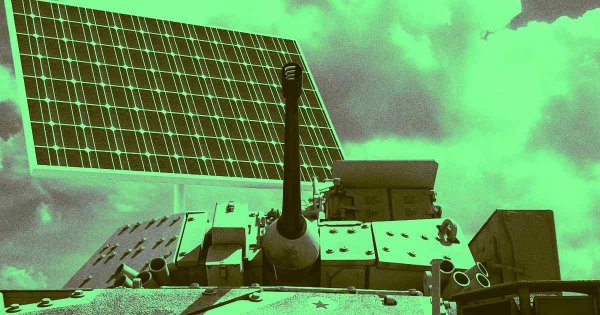
NATO Chief Proposes Solar Panels for Tanks to Cut Emissions
NATO Secretary-General Jens Stoltenberg suggested equipping military tanks with solar panels to reduce greenhouse gas emissions and improve combat effectiveness. He argued that decreasing reliance on fossil fuels would also reduce supply line vulnerabilities. The proposal was made during a recent online seminar on the future of the alliance.

EU Study Finds Hazardous Substances in All 81 Headphone Models Tested
A European Union-funded analysis of 81 headphone models found hazardous chemicals, including Bisphenol A, in every sample. Researchers warn that long-term skin contact, especially during exercise, may accelerate chemical migration into the body. The findings have prompted calls for broader bans on endocrine-disrupting substances in consumer goods.

MIT and Innsbruck Team Shrinks Quantum Factoring to Five Atoms
Researchers at MIT and the University of Innsbruck have built a five-atom quantum computer that can factor the number 15 with over 99% confidence, demonstrating a scalable approach to quantum computing that could eventually challenge current encryption methods.