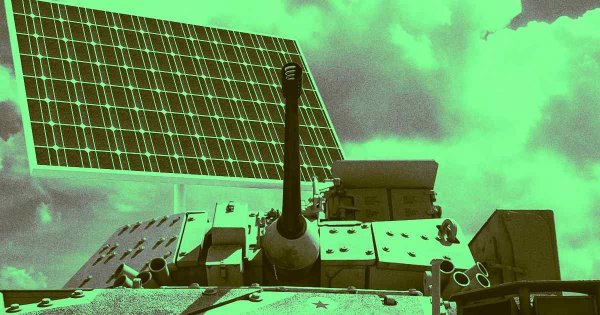
NATO Secretary-General Jens Stoltenberg has floated an unconventional idea to curb the military's carbon footprint: fitting battle tanks with solar panels. Speaking at a recent online seminar on the alliance's future, he argued that reducing reliance on fossil fuels would not only cut greenhouse gas emissions but also improve operational effectiveness by lessening the vulnerability of supply lines.
Stoltenberg acknowledged that heavy equipment like tanks, fighter jets, and naval vessels consume vast amounts of fuel and emit significant greenhouse gases. He urged NATO member states to explore alternative energy sources, including solar panels, to power missions. "We know that heavy battle tanks or fighter jets and naval ships consume a lot of fossil fuel and emit greenhouse gases," he said, "therefore we have to look into how we can reduce those emissions by alternative fuels, solar panels or other ways of running our missions."
The proposal, first reported by The National News, comes amid growing scrutiny of the military's environmental impact. While reducing the number of tanks or missions might seem a straightforward climate solution, Stoltenberg's approach focuses on making the equipment itself cleaner, rather than cutting back on operations.
Why Solar Panels on Tanks?
Beyond the environmental benefits, Stoltenberg highlighted a strategic advantage: reducing dependence on fossil fuels would make forces less exposed to attacks on fuel convoys. "One of the vulnerabilities in any military operation is the supply of fossil fuels along vulnerable supply lines," he said. "If we can make us less dependent on that, we are reducing emissions, but at the same time increasing military effectiveness."
The idea, while innovative, raises practical questions about the durability and power output of solar panels in combat conditions. However, Stoltenberg's comments signal a growing awareness within NATO of the need to address the climate impact of defense activities, even as the alliance continues to prioritize security.
The seminar, focused on the future of the military and trade alliance, provided a platform for Stoltenberg to urge member nations to integrate environmental considerations into their defense planning. His remarks underscore a broader trend among militaries worldwide to explore cleaner technologies, from electric vehicles to biofuels, as part of their operational strategies.
While no concrete timeline or implementation plan was announced, Stoltenberg's proposal adds to the ongoing debate about how to balance military readiness with environmental responsibility. The challenge, as he framed it, is to reduce emissions without compromising the effectiveness of NATO's forces.














Leave a Comment