The default female voices and names of popular virtual assistants such as Siri, Alexa, and Cortana have sparked a growing debate about whether technology is quietly reinforcing gender stereotypes. While engineers push the boundaries of artificial intelligence, the anthropomorphic choices embedded in these systems may carry unintended social consequences.
IBM Watson, one of the most powerful supercomputers, uses a male name and voice, while nearly all consumer-facing assistants default to female personas. This disparity has often been chalked up to marketing strategy. Jason Mars, CEO of Clinc, a financial software company, told the New York Times that he chose a “helpful, young Caucasian female” voice for his AI because commercial success demands “a kind of pressure to conform to the prejudices of the world.”
Some researchers argue that the preference for female voices is deeply rooted in human psychology. Clifford Nass, a Stanford University professor, said in a 2011 CNN interview that “it’s a well-established phenomenon that the human brain is developed to like female voices.” But critics counter that habit and conditioning are not the same as ethical responsibility. Drawing a parallel, they note that giving AI assistants voices associated with historically subservient groups would be widely condemned, yet female voices are accepted without question.
Judith Butler, a prominent feminist philosopher, has argued that gender norms are not biologically determined but are built through societal conditioning over centuries. Nass’s own book, Wired for Speech, suggests that male voices are often perceived as authoritative, while female voices are linked to helpfulness. Butler would see this as a reflection of patriarchal dominance rather than an inherent truth.
Why the Default Matters
As technology becomes more embedded in daily life, the subtle cues from AI interactions may shape perceptions. When subservient assistants use women’s voices, it can reinforce the idea that women are natural helpers. While such design may boost sales or user comfort, it does not make it right. Changing the names and voices of AI assistants could be a step toward challenging archaic power structures.
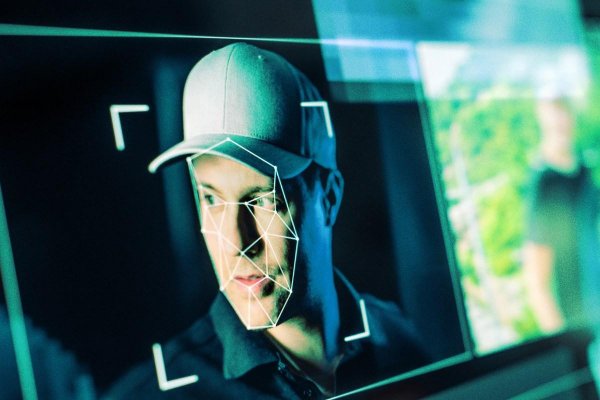
Beyond voice, the programming itself may carry bias. Algorithms are trained on data selected by engineers, and if that data lacks diversity, the AI can reflect those limitations. Kate Crawford, writing in the New York Times, noted that systems trained predominantly on white faces have difficulty recognizing nonwhite faces. A real-world example occurred when Google’s photo app mistakenly categorized Black people as gorillas.
The tech industry, largely composed of white, middle-class men, may inadvertently narrow AI’s worldview. This could lead to regressive outcomes or simply limit the potential of AI systems. Addressing this requires hiring more women and people of diverse backgrounds in technical and research roles.
Toward Neutrality
Some companies are already moving toward gender-neutral options. Google Assistant, for instance, has introduced a voice that is not explicitly male or female. By reducing the humanization of AI, designers might avoid reinforcing stereotypes and instead focus on how we interact with technology in a more neutral way.
The conversation is not about rejecting female voices but about questioning the default. As AI continues to shape our perceptions, the choices made by developers carry weight. The hope is that future designs will reflect a broader understanding of gender and avoid perpetuating outdated norms.

















Leave a Comment