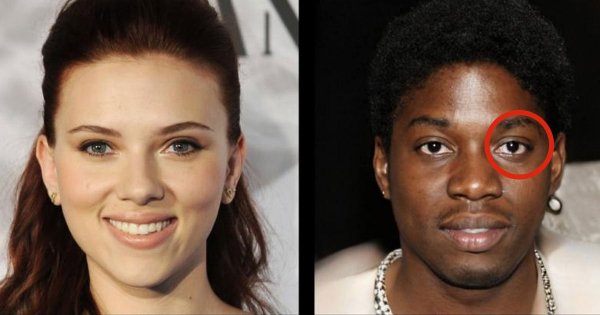
Astronomers have turned their telescopes toward a down-to-Earth problem: spotting AI-generated portraits by analyzing the reflections in a person's eyes. A team led by Adejumoke Owolabi, a master's student at the University of Hull, presented findings at the Royal Astronomical Society's National Astronomy Meeting showing that deepfake images often contain subtle but detectable inconsistencies in how light reflects off the eyeballs.
The method borrows directly from techniques used to study distant galaxies. Kevin Pimbblet, a professor of astrophysics at Hull, explained that the team measures the shape and distribution of light reflections in both eyes and compares them. In real photographs, the reflections align with physical laws; in deepfakes, they often do not. “The reflections in the eyeballs are consistent for the real person, but incorrect (from a physics point of view) for the fake person,” Pimbblet said in a statement.
The approach uses automated detection to extract reflection features, then applies the CAS (concentration, asymmetry, smoothness) and Gini indices—tools originally designed to classify galaxies—to quantify the similarity between the left and right eye. The Gini coefficient, which orders pixels by brightness and compares them to an even distribution, is particularly useful for measuring how light is spread within the reflection. The results, Pimbblet noted, show that deepfakes exhibit measurable differences between the pair of eyes.
This novel application comes at a time when AI image generators are producing increasingly convincing portraits of people who do not exist. The ability to reliably distinguish real from synthetic is critical, as deepfakes can be used to spread misinformation or manipulate public perception.
Not a Silver Bullet
Pimbblet cautioned that the method is not infallible. “It's important to note that this is not a silver bullet for detecting fake images,” he said. “There are false positives and false negatives; it's not going to get everything. But this method provides us with a basis, a plan of attack, in the arms race to detect deepfakes.”
The research adds a new tool to the forensic toolkit, but experts agree that no single technique will solve the challenge of AI-generated content. As the technology evolves, so too must the methods to detect it.
















Leave a Comment