For decades, physicists have sought a single framework that can reconcile the two most successful yet incompatible descriptions of the universe: general relativity, which governs gravity and the cosmos at large, and quantum mechanics, which explains behavior at the atomic and subatomic scale. A new proposal from a researcher in Spain suggests that a 220-year-old experiment, modified in a subtle but crucial way, could expose a crack in one of quantum theory's foundational assumptions and point toward a unified theory.
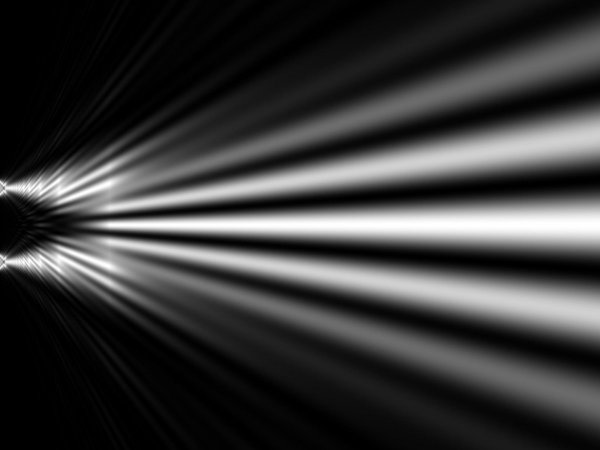
James Quach, a physicist at the Barcelona Institute of Science and Technology, has put forward a plan that revisits Thomas Young's double-slit experiment, first performed in 1801. In that classic setup, particles such as electrons are fired at a barrier with two narrow slits, and the pattern they produce on a screen behind the barrier reveals their wave-like or particle-like nature. When single electrons are sent through, they create an interference pattern of alternating bright and dark bands—behavior that defies classical expectations but is precisely predicted by the Born rule, a mathematical formula that calculates the probability of a particle landing at a given point.
The Born rule has never failed an experimental test, yet physicists cannot explain why it works. It is simply accepted as a given, a pillar of quantum mechanics that lacks a deeper justification. Quach's idea is to deliberately engineer a scenario where the Born rule might break down, thereby exposing the weak points in our current understanding and potentially revealing how quantum mechanics and general relativity could be reconciled.
The proposal, which has not yet undergone formal peer review or experimental verification, builds on a concept from the late physicist Richard Feynman. Feynman famously argued that when calculating the probable paths of a particle, one must consider all possible routes—including those that seem nonsensical. In the standard double-slit analysis, only two paths are considered: through slit A or through slit B. Quach suggests adding a third path: the particle could go through slit A, then double back to slit B, and finally travel to the screen.
To test this, Quach proposes placing two detectors behind the double-slit barrier. One detector would determine whether the particle passed through slit A or slit B, while the other would register whether the particle went through just one slit or both, without specifying which one. The probabilities that emerge when interference between these three paths is taken into account differ from those predicted by the Born rule, which only accounts for two paths. If the experiment were to yield results that deviate from Born rule predictions, it would signal that some underlying assumption in our current theories is flawed.
Such a finding would not immediately deliver a theory of everything, but it could indicate which principles in quantum mechanics or general relativity must be revised. The search for this unified framework has been a central goal of theoretical physics for more than half a century, with luminaries like Einstein and Feynman having grappled with the problem. While Quach's proposal remains theoretical, it offers a concrete, testable avenue for probing the boundaries of quantum theory.
If the experiment is eventually performed and the Born rule is found to fail under these conditions, it would mark a significant departure from established physics. Until then, the proposal stands as a thought-provoking strategy for tackling one of science's most enduring puzzles.








Leave a Comment